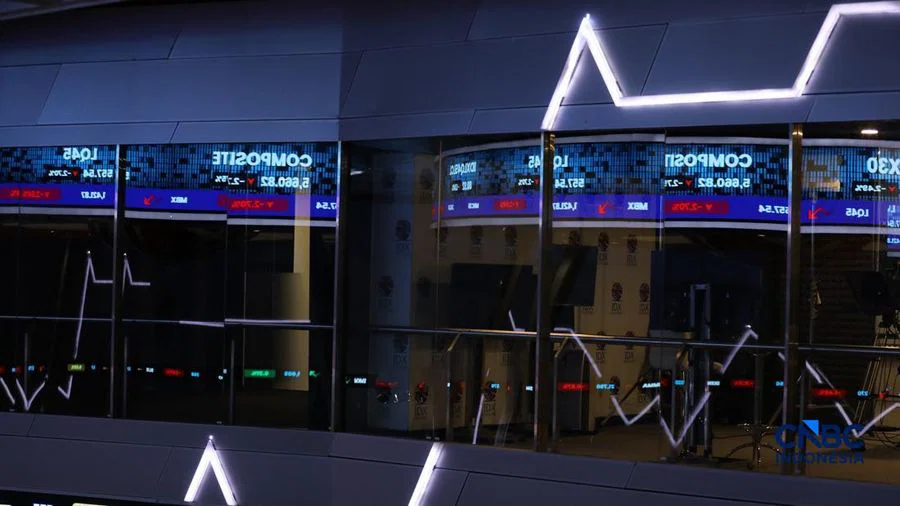
Rupiah asset classes ended firmer on Friday, supported by improving global risk sentiment as continued US-Iran technical talks eased geopolitical concerns, while a softer US dollar followed Japan’s signal to support the yen. The JCI rose by 0.2% to 5,924 (+5.0% MTD, -31.5% YTD), led by gains in the basic materials and industrials sectors. Foreign investors, however, remained cautious, recording net equity outflows of Rp421.7bn (MTD: -Rp2.5tn; YTD: -Rp76.2tn), while trading value declined to Rp8.8tn. Regional equities also closed mostly higher, led by the Nikkei (+1.2%) and the Hang Seng (+0.6%).
The government bond market extended its rally despite modest foreign selling. The 5-yr FR109 yield declined by 2.6 bps to 7.16%, while the 10-yr FR108 yield fell by 4.3 bps to 7.21%. The rupiah appreciated by 0.16% to Rp18,055/USD (down 0.97% MTD, down 8.18% YTD). Indonesia’s 5-yr USD sovereign yield declined by 3.4 bps to 4.94%, while the 5-yr CDS narrowed slightly to 91.09 bps. Although foreign investors recorded a net sell of Rp0.6tn, the selling was concentrated in non-benchmark bonds, while benchmark series still posted a net buy of Rp0.3tn.
According to IDX s OTC trading report, Indonesian government bond trading activity moderated on Friday (10-July), with total volume declining to Rp18.6tn (vs. Rp29.6tn on 9-July). Turnover came in above prior week s daily average of Rp24.3tn, the 2026 YTD average of Rp 30.8tn, and the 2025 daily average of Rp32.0tn. The 5-yr FR0109 benchmark series (maturing on 15-Mar-31) led market activity, recording Rp5.8tn in trading volume. Its price rose to 95.35 (+0.61%), while the yield declined to 7.06% (-15.22 bps). This was followed by the 2.1-yr FR0095 series (maturing on 15-Aug-28), recording Rp2.5tn in trading volume. Its price rose to 98.48 (+0.03%), while the yield declined to 7.17% (-1.21 bps). Close behind was the 0.01-yr PBS032 series (maturing on 15-Jul-26), with a total volume of Rp1.9tn. Its price rose to 99.97 (+0.97%), while the yield declined to 7.23% (-5,678.06 bps).
The latest government bond ownership data (settlement as of 8-Jul) showed that foreign holdings edged down slightly to Rp887.9tn, or 12.78% of outstanding government bonds, while year-to-date net inflows remained positive at Rp9.3tn. Domestic investors continued to provide strong support, led by insurance companies and pension funds (+Rp135.9tn), followed by Bank Indonesia (+Rp83.2tn), other domestic investors (+Rp81.8tn), banks (+Rp32.9tn), retail investors (+Rp23.1tn), and mutual funds (+Rp14.2tn).
Meanwhile, demand at Bank Indonesia’s 10-Jul SRBI auction moderated further to Rp30.5tn from Rp39.1tn in the previous auction. BI maintained its award size at Rp15tn, while SRBI yields eased slightly across all tenors, with the weighted average yield declining by 1 bp to 7.64%, suggesting that domestic money market conditions continued to stabilize.
Domestic Corp Bond Market
On the corporate side, trading activity strengthened on Friday (10-July), with total volume rising to Rp13.5tn (vs. Rp9.5tn on 9-July). Turnover came in below the prior week s daily average of Rp12.1tn, the 2026 YTD average of Rp8.5tn, and the 2025 daily average of Rp4.0tn.
The SIBALI01BCN3 series (maturing on 05-Dec-28), rated idA(sy), was the most actively traded with a total volume of Rp971bn. Its price rose to 98.54 (+0.11%), while the yield declined to 7.92% (-5.04 bps). This was followed by the BNII05ACN1 series (maturing on 10-Jul-27), rated idAAA with a volume of Rp559bn. Its price rose to 100.02 (+0.02%), while the yield declined to 7.33% (-1.94 bps). Close behind was the SMLPPI01CN1 series (maturing on 04-Oct-29), rated idA(sy) with a volume of Rp417bn. Its price remained flat at 109.05, while the yield declined to 7.81% (-0.24 bps).
Over the week, average daily corporate bond trading volume increased to Rp11.8tn (vs. Rp12.1tn in the prior week). The SIBALI01BCN3 series (maturing on 5-Dec-28), rated idA(sy), emerged as the most actively traded corporate bond, recording total weekly trading volume of Rp2.9tn.
Pefindo has assigned its idAA+ financial strength rating with a stable outlook to PT Asuransi Kredit Indonesia (Askrindo). According to Pefindo, the rating reflects Askrindo s important role to the Indonesian government, very strong business position, very strong capitalization profile. However, the rating is constrained by its modest operating performance.
Pefindo has assigned its idA- financial strength rating with a stable outlook to PT Reasuransi Syariah Indonesia (Reindo Syariah). According to Pefindo, the rating reflects the Company s strategic importance to PT Reasuransi Indonesia Utama (Persero) (Indonesia Re or the Parent), moderate asset quality, and adequate liquidity. However, the rating is constrained by Reindo Syariah s increasing pressure on its capitalization profile, below-average operating performance, and challenges in expanding its penetration in sharia insurance.
Pefindo has assigned its idAAA(f) rating to Batavia Dana Kas Maxima. The assigned rating was based on the Fund’s portfolio as of April 30, 2026 (4M2026). According to Pefindo, the rating reflects the very strong underlying credit quality of the funds, superior investment management practices, low to moderate exposure to market risk, and neutral portfolio assessment regarding its concentration risk profile.
Pefindo has assigned its idAAA(f)/S2 rating to Batavia Dana Obligasi Ultima. The assigned rating was based on the Fund’s portfolio as of April 30, 2026. According to Pefindo, the rating reflects the very strong underlying credit quality of the funds, superior investment management practices, low to moderate exposure to market risk, and neutral portfolio assessment regarding its concentration risk profile.
Pefindo has assigned its idAAA(f) rating to Batavia Obligasi Negara Indonesia. The assigned rating was based on the Fund’s portfolio as of April 30, 2026 (4M2026). According to Pefindo, the rating reflects the very strong underlying credit quality of the funds, superior investment management practices, low to moderate exposure to market risk, and neutral portfolio assessment regarding its concentration risk profile.
Fitch Ratings upgraded PT Kawasan Industri Jababeka Tbk’s (KIJA) Long-Term Issuer Default Rating (IDR) to ‘B’ from ‘B-‘ and its National Long-Term Rating to ‘BBB+(idn)’ from ‘BB+(idn)’, with a Stable Outlook, reflecting improved liquidity and reduced refinancing risk following the early redemption of its US dollar notes through a IDR3.4 trillion 15-year Bank Mandiri loan.
Fitch Ratings Indonesia upgraded PT Sunindo Kookmin Best Finance’s (SKBF) National Long-Term Rating to ‘AA+(idn)’ from ‘AA(idn)’ with a Stable Outlook, reflecting a stronger expectation of extraordinary support from its majority shareholder, KB Capital Co., Ltd., and ultimate parent, KB Financial Group Inc. (KBFG). The upgrade is driven by SKBF’s improving performance, maturing and more diversified business model, and its increasing strategic importance within KBFG’s Indonesian expansion strategy, where Indonesia is designated as the group’s “second home” market.
Fitch Ratings Indonesia affirmed PT Shinhan Indo Finance’s (SIF) National Long-Term Rating at ‘AA+(idn)’ with a Stable Outlook, reflecting Fitch’s expectation of extraordinary support from its majority shareholder, Shinhan Card Co., Ltd., and ultimate parent, Shinhan Financial Group (SFG). The rating is supported by Shinhan Group’s strong credit profile, majority ownership, shared branding, ongoing parental guarantees, and a proven record of capital support, including a IDR352 billion equity injection in 2022.
Fitch Ratings Indonesia affirmed PT KB Finansia Multi Finance’s (KBFMF) National Long-Term Rating and senior debt rating at ‘AAA(idn)’ with a Stable Outlook, reflecting Fitch’s expectation of extraordinary support from its majority shareholder, KB Kookmin Card Co., Ltd. (KB Card), and ultimate parent, KB Financial Group (KBFG). The rating is supported by KB Group’s strategic commitment to expanding its presence in Indonesia, majority ownership, shared branding, ongoing parental guarantees, and a strong track record of capital support.
Fitch Ratings Indonesia affirmed PT Toyota Astra Financial Services’ (TAF) National Long-Term Rating at ‘AAA(idn)’ and National Short-Term Rating at ‘F1+(idn)’, with a Stable Outlook, reflecting Fitch’s expectation of extraordinary support from its 50% shareholder, Toyota Motor Corporation.
Fitch Ratings Indonesia affirmed PT Bussan Auto Finance’s (BAF) National Long-Term Rating at ‘AAA(idn)’ with a Stable Outlook, reflecting Fitch’s expectation of extraordinary support from its 45% shareholder, Mitsui & Co., Ltd.